PUZZLE GAME

Sliding Puzzle

Slide numbered tiles into order.

Moves 0Time 0:00

Click a tile (a whole row or column slides) · arrow keys / WASD · N — new game

About this game

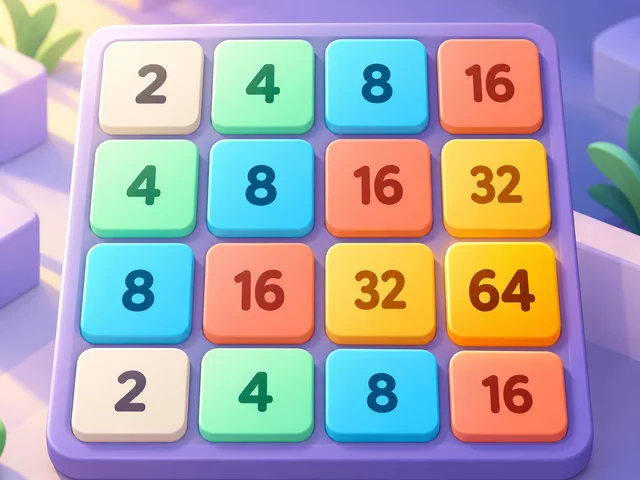
Sliding Puzzle gives you a square of numbered tiles with one empty space. Slide tiles into the gap until the numbers run in order from left to right and top to bottom. Pick a 3×3, 4×4 or 5×5 board; every shuffle is solvable, so there is always a way out. The game counts your moves and time, so you can try to solve each board with fewer steps. Play Sliding Puzzle free online in your browser — no download or sign-up needed.
Game Information

Category
Puzzle Games
Players
Single player
Difficulty
3×3, 4×4 and 5×5 boards
Game type
Numbers, Logic, Classic
Works on
Desktop and mobile browsers
Controls
  • Mouse or touch: click or tap a tile to slide it
  • Keyboard: arrow keys or W A S D
  • Touch: swipe a tile toward the gap
  • Keyboard: N starts a new game
Features
  • Three board sizes
  • Move counter and timer
  • Best result saved per size
  • Every shuffle is solvable

How to Play Sliding Puzzle

Objective

Arrange the tiles in order: 1, 2, 3 … with the empty space in the bottom-right corner.

Starting a game

Choose a board size. The tiles are shuffled in a way that guarantees the puzzle can be solved.

Rules

  • Only tiles in the same row or column as the empty space can move.
  • Clicking a tile that is further along the row or column slides the whole line of tiles toward the gap in a single move.
  • Each slide counts as one move, whatever the number of tiles it shifts.

Controls

  • Mouse or touch: click or tap a tile to slide it
  • Keyboard: arrow keys or W A S D
  • Touch: swipe a tile toward the gap
  • Keyboard: N starts a new game

Winning and losing

The puzzle is solved when every tile is in place. There is no way to lose; your moves and time are compared with your best for that size.

Tips and Strategies

  • Solve the top row first, then the next row, and leave the last two rows for the end.
  • Place the last two tiles of a row together before moving them into position.
  • Do not worry about a temporary mess: restoring a row often needs a short fixed sequence of moves.
  • Slower and thoughtful play usually gives fewer moves than quick random sliding.
  • Start with 3×3 to learn the patterns, then move up to larger boards.

Game Variations

  • 3×3: the classic eight-tile puzzle.
  • 4×4: the well-known fifteen-tile puzzle.
  • 5×5: a larger twenty-four-tile board.

Frequently Asked Questions

Can every shuffled board be solved?

Yes. Only positions that can be solved are generated.

What counts as a move?

One slide, even if it moves several tiles in the same row or column at once.

Does it save my best result?

Your best moves and time for each board size are stored in your browser.

More Games

Looking for something else to play? Browse more puzzle games or the full catalog.